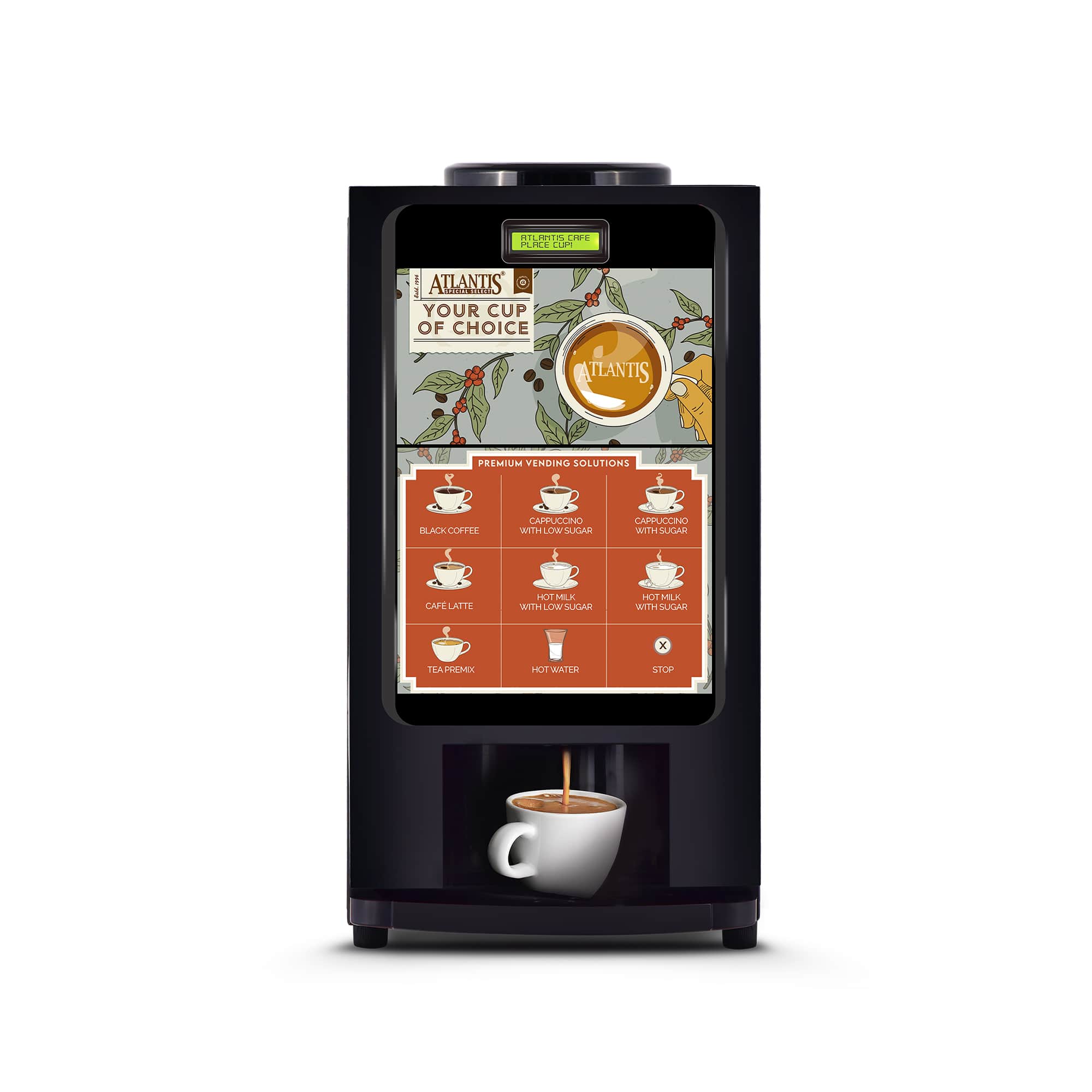
Restaurants and cafés live and die on two numbers: how fast you turn tables and how much each customer spends. A coffee vendo machine quietly helps both. Put a self-serve unit near the counter and you add a drinks stream that runs without tying up a barista, speeds up service during the rush, and gives customers a reason to add one more item to the bill. This guide is for Philippine restaurant owners, carinderia operators, and small café owners weighing whether a vendo machine belongs alongside, or instead of, a full espresso setup.
Adding a drinks revenue stream
Every plate that leaves your kitchen is a chance to sell a drink, and many restaurants leave that money on the table simply because making coffee is a hassle mid-service. A vendo machine removes the hassle. A hot coffee, white coffee, or hot choco becomes a one-button add-on that your cashier can offer at checkout, or that customers grab themselves. For a carinderia or fast-casual spot with no barista, it is the difference between selling drinks and not selling them at all. Because premix has a low cost per cup, the margin on each drink is healthy.
If you are comparing this against building a full coffee menu, our coffee vendo vs coffee shop piece lays out the trade-offs in detail.
Customer convenience and self-serve counters
Self-serve is having a moment in Philippine dining, and coffee fits it perfectly. A small drinks station with a vendo machine, cups, and a water dispenser lets customers help themselves while your floor staff focus on food and tables. It works for buffet and unli-rice concepts, food courts, and casual diners where a full drinks service would slow everyone down. The customer gets their coffee instantly and on their own schedule, which reads as generous and efficient at the same time.
Fast service when it matters most
The real test of any restaurant system is the lunch and dinner rush. That is exactly when a barista becomes a bottleneck, pulling shots one at a time while orders stack up. A vendo machine pours a complete drink in seconds, in parallel with everything else, so coffee never becomes the reason an order is late. During a packed Saturday service, the ability to serve a dozen coffees without a single extra pair of hands is worth more than the machine costs.
Low labour, real savings
Labour is one of the biggest fixed costs in food service, and a trained barista commands a premium. A vendo machine needs no barista skill at all: any staff member, or the customer, can operate it. That frees your team for higher-value work and lets even a lean operation offer coffee without adding a role. Over a year, the saved labour on a single position easily outweighs the one-time cost of the machine.
The Select 7-Option for variety
When your goal is to offer a proper drinks menu, the Select 7-Option (₱36,800) is the flagship choice. Seven selections let you run espresso-style coffee, white coffee, hot choco, milk tea, and more from one machine, so customers feel they have a real choice rather than a single default. For a restaurant that wants its self-serve station to feel like an amenity, not an afterthought, the extra options justify the higher price. Smaller diners can start with a Neo 3-Lane (₱25,800) or Neo 4-Lane (₱29,600) and expand later. See the whole line-up on the vending machines page.
Cool Vend for cold drinks
In the Philippine climate, cold drinks often outsell hot ones, and this is where the Cool Vend range comes in. A Cool Vend unit dispenses chilled beverages, so your self-serve station covers iced coffee, cold choco, and refreshers alongside the hot menu. Pairing a hot premix machine with a Cool Vend gives a restaurant a genuinely complete drinks corner: hot in the morning and rainy afternoons, cold through the midday heat. Cool Vend is a premium option, so weigh it against your expected cold-drink volume, but for a busy diner it rounds out the offer nicely.
Easy maintenance that fits a kitchen routine
Restaurant kitchens already run cleaning routines, and a premix machine slots right in. There are no grinders to calibrate or group heads to backflush, so the daily close-down adds only a few minutes: wipe the dispensing area, rinse the mixing bowls and nozzles, empty the drip tray, and top up canisters for the next day. A weekly deeper clean and a monthly descale round it out. Our maintenance guide has the full checklist, and FIFI offers an AMC plus a one-year on-site warranty if you would rather a technician handle upkeep.
Cost per cup vs a barista
The clearest way to decide is to compare the true cost of a cup each way. A barista setup carries wages, training, an espresso machine and grinder, and slower output during the rush. A premix vendo carries a low ingredient cost and almost no labour. The table below is illustrative, but the shape of it holds true for most casual restaurants.
| Factor | Premix coffee vendo | Barista + espresso setup |
|---|---|---|
| Upfront cost | From ₱22,500 (Select 7-Option ₱36,800) | Espresso machine, grinder and fit-out cost much more |
| Labour per cup | None, one-button self-serve | Trained barista wages |
| Speed at peak | Seconds per cup, in parallel | One drink at a time, can bottleneck |
| Skill needed | None | Barista training and consistency |
| Cold drinks | Add a Cool Vend unit | Extra prep and equipment |
Want to add a self-serve drinks station without hiring a barista? Book a free on-site demo and we will help you plan the right machine mix for your restaurant.
The bottom line for restaurants and cafés
For most Philippine restaurants and cafés, a coffee vendo is not a replacement for good food, it is a low-effort way to add drinks revenue, speed up the rush, and cut labour all at once. Start with a Select 7-Option or Neo 3-Lane for variety, add a Cool Vend if cold drinks are big for you, keep the daily clean-down simple, and price your cups to protect a healthy margin. Combine it with a reliable water dispenser and a steady premix supply, and your self-serve corner starts paying for itself fast. With rent-to-own and a one-year on-site warranty, trying it carries very little risk.