A hospital never fully sleeps. At 2 a.m. there is a nurse finishing charts, a watcher waiting outside the ICU, and a resident on their third straight shift. All of them want the same small comfort — a hot cup of coffee or tea without leaving the building. That is exactly the gap a coffee vendo fills. Unlike a canteen that closes at 8 p.m., a well-placed coffee vendo machine serves quietly, 24 hours a day, with no extra staff on the payroll.
This guide walks through what actually matters when you put a beverage machine inside a hospital or clinic in the Philippines: where to place it, how to keep it reliable and clean, and which FIFI models fit the round-the-clock reality of healthcare.
Why hospitals are a natural fit for a coffee vendo
Healthcare facilities have a built-in, non-stop crowd. Every admitted patient usually brings one or two watchers (bantay). Add outpatients, medical reps, and the staff themselves, and you have steady foot traffic at hours when nothing else is open. People are also tired, waiting, and glad to pay ₱10 to ₱20 for a warm drink. That is the ideal customer for a self-serve machine — motivated, present, and not price-sensitive in a stressful moment.
For the hospital, it is a low-effort amenity. No new hire, no extra counter, no cooking permit. The machine works while the admin sleeps, and it turns an idle corner of a hallway into a small service that patients and families genuinely appreciate.
Where to place the machine
Placement decides everything. The same machine can be busy in one spot and forgotten in another. In a hospital, three locations tend to earn their keep:
- Main lobby and admitting area — the highest traffic point, seen by every visitor and outpatient who walks in.
- ER and OPD waiting areas — long, anxious waits where a warm cup is welcome and there is nothing else to do.
- Staff lounge or nurses’ station pantry — for the people who keep the place running through the night shift.
Put a public machine near seating and clear signage, on a level floor close to a grounded power outlet. For staff areas, a slightly larger-capacity unit makes sense because the same faces come back several times a shift. If you are unsure, our guide to the best places to install a coffee vendo breaks down traffic and sightlines in more detail.
Reliability matters more here than anywhere
In a mall, a broken machine is a minor annoyance. In a hospital, an out-of-order sign at 3 a.m. feels like the building let you down. So reliability is not a nice-to-have — it is the whole point. Every FIFI machine ships with a 1-year on-site warranty, which means if something fails, a technician comes to you rather than you shipping a heavy unit back and forth. For a facility that runs 24/7, that on-site promise is the difference between a few hours of downtime and a few days.
It also helps to keep the machine simple. FIFI’s Atlantis units are premix and instant systems (plus the Jazz capsule model) rather than fussy bean-to-cup grinders — fewer moving parts means fewer things to break at odd hours. If you want to understand that trade-off, see our bean-to-cup vs premix comparison.
Hygiene and cleaning in a clinical setting
Hospitals hold everyone to a higher standard of cleanliness, and a public beverage machine is no exception. The good news is that a premix coffee vendo is a sealed, low-touch system: the powders sit in enclosed canisters, water is heated inside, and the drink drops straight into the cup. Nobody’s hands touch the ingredients.
A simple daily routine keeps it presentable — wipe the buttons and drip tray, empty the waste tray, and check that cups and stirrers are stocked. A deeper weekly clean of the mixing bowls and nozzles keeps flavor consistent and the machine sanitary. Our maintenance guide lays out a full daily-weekly-monthly checklist you can hand to housekeeping.
Hot water for tea, and drinks beyond coffee
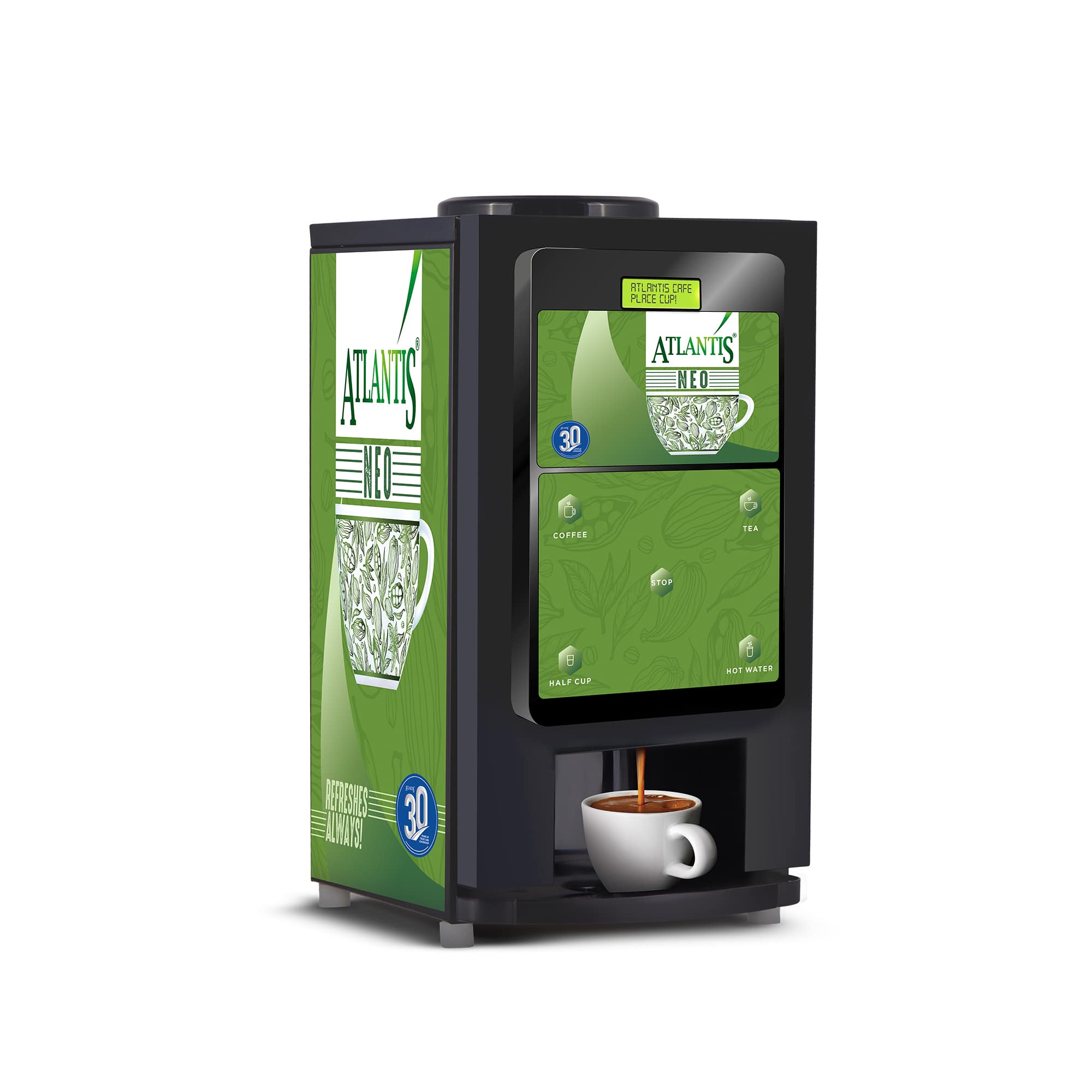
Not everyone in a hospital wants coffee. Some patients are told to avoid caffeine, and plenty of watchers prefer tea, hot choco, or a simple cup of hot water for their own sachet. A multi-lane machine covers all of it — one lane for brewed coffee, one for 3-in-1, one for choco or milk tea, and the hot-water function on top. FIFI’s tea and coffee premixes come in 47 blends, so you can tune the menu to your crowd. For daytime crowds in warm regions, a Cool Vend cold-beverage unit adds iced drinks and bottled water alongside the hot line.
Which FIFI machine fits which hospital area
| Hospital area | Recommended model | Price | Why it fits |
|---|---|---|---|
| Small clinic reception | Classic 2-Lane (2L) | ₱22,500 | Lowest cost, two drink choices for lighter traffic |
| OPD / ER waiting area | Classic 4-Lane | ₱26,800 | More variety for long waits; steady, simple operation |
| Main lobby (unattended) | Neo Coin-Operated 2-Lane | ₱26,500 | Hands-off cash handling, ideal for 24/7 public use |
| Busy tertiary hospital lobby | Select 7-Option | ₱36,800 | Widest menu for high, mixed foot traffic |
| Staff lounge / night shift | Neo 3-Lane | ₱25,800 | Durable build for repeat use across long shifts |
Rent, buy, or rent-to-own?
Not every clinic wants to spend capital upfront, and hospital procurement can be slow. FIFI offers rent-to-own and AMC (annual maintenance contract) options alongside outright purchase, plus a free on-site demo so your admin and housekeeping teams can see the machine work before committing. A small clinic testing the waters might start with rent-to-own; a large hospital placing several units might buy and add an AMC for scheduled servicing. Our rent vs buy breakdown helps you decide which path fits your budget.
Book a free on-site demo and let your team try a FIFI coffee vendo in your own lobby or staff room before you decide.
The bottom line
A hospital or clinic is one of the most dependable homes for a coffee vendo precisely because the need never stops. Place it where tired people wait, keep it clean with a simple routine, lean on the on-site warranty for peace of mind, and offer more than just coffee. Do that, and a quiet machine in the corner becomes one of the small kindnesses that patients, watchers, and staff remember about your facility.