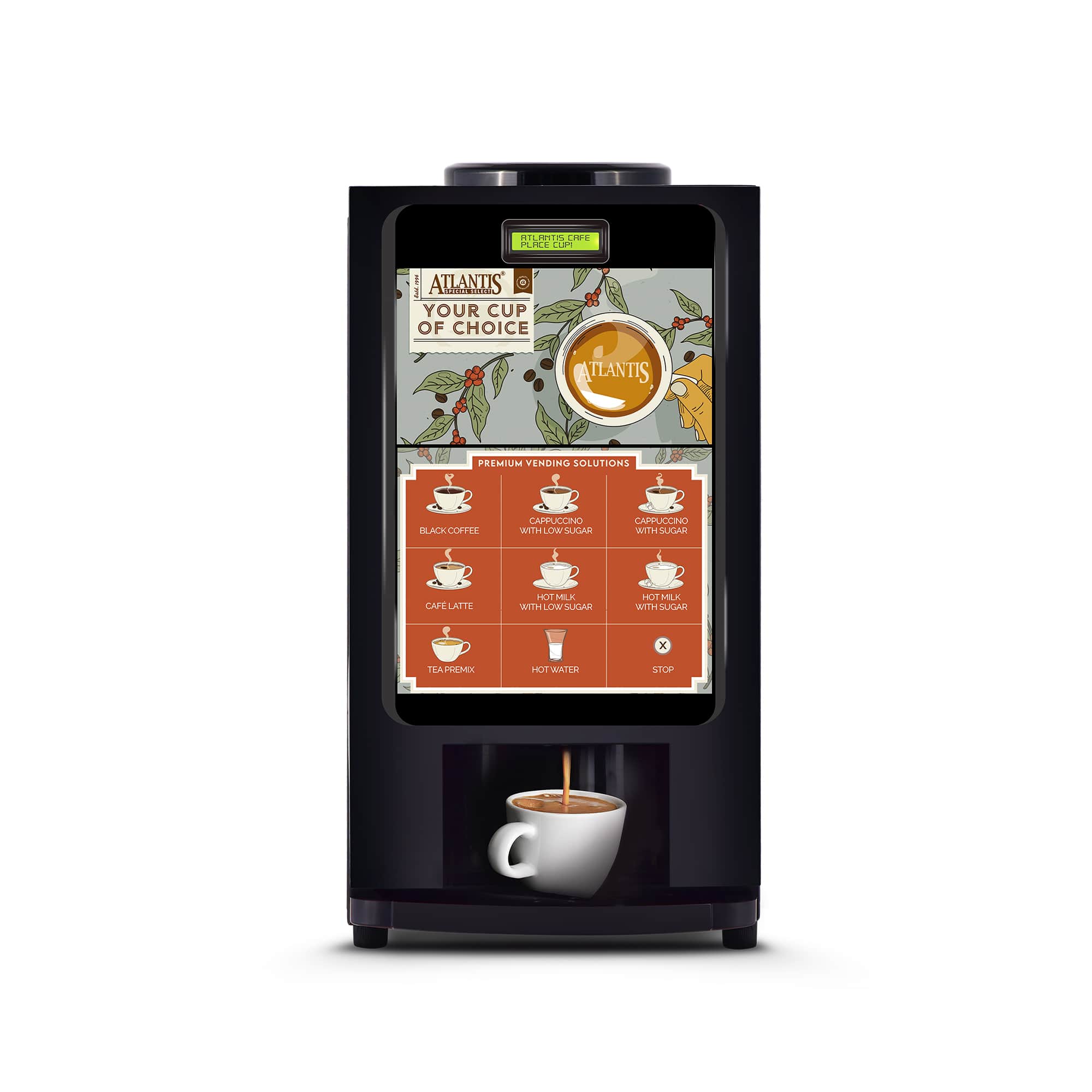
A coffee vending machine — “coffee vendo” in Filipino — is one of the most beginner-friendly businesses you can start in the Philippines. There is no franchise fee, no daily staffing, and the machine works around the clock in a spot where people already pass. This guide walks through every step: how much capital you need, which machine to pick, where to place it, and how to think about the returns honestly.
1. Understand the negosyo model
A coffee vendo negosyo is simple: you place a machine in a high-traffic location, load it with 3-in-1 premix, and each cup is paid for — either by coin/cashless (a coin-operated machine) or under an office arrangement where the company subsidises the cups. Your income is the gap between what a cup sells for and what the premix and power cost you.
Unlike a food cart or sari-sari store, the machine does not need a person minding it. That is the appeal for people who want a side hustle on top of a day job.
2. Know your starting capital
The machine is your main upfront cost. At FIFI Machine Trading, current machine prices start at ₱22,500 for a Classic 2-Lane office model and rise with capacity and features:
| Machine | Best for | Price |
|---|---|---|
| Classic 2-Lane | Small offices, steady all-day traffic | ₱22,500 |
| Neo 4-Lane | Busy offices, dedicated hot-water tap | ₱29,600 |
| Neo Coin-Operated 3-Lane | Self-paying pantries & public areas | ₱27,800 |
| Select 7-Option | Maximum drink variety in one unit | ₱36,800 |
On top of the machine, budget for your first stock of premix (3-in-1 coffee, tea and cold-beverage premixes run roughly ₱175 to ₱1,800 per pack depending on size and blend), plus cups. You can buy the machine outright or take it on rent-to-own to spread the cost — useful if you want to start without the full capital.
3. Choose the right machine for your plan
Match the machine to where it will live:
- Coin-operated machine — the machine collects payment per cup. Best if you are placing it in a public or semi-public spot (factory, terminal, dormitory, clinic waiting area).
- Standard (Classic / Neo) — best for offices where the company pays for a staff pantry, or where you settle billing directly with the site.
- Cool Vend — adds cold beverages, which sell well on warm production floors and in retail.
See the full range on the vending machines page, or read our rent-to-own vs buy guide to decide how to pay for it.
4. Find a high-traffic location
Location decides everything. The best spots have steady foot traffic and people who wait or take breaks:
- BPO and office floors running night shifts (agents want coffee at 3 AM when canteens are closed)
- Factories and plants with break rooms
- Hospital and clinic waiting areas
- Schools, dormitories and university belts
- Terminals, malls and convenience stores
If you are targeting Metro Manila, our city guides for Manila, Quezon City, Makati and others describe the local business districts where offices cluster.
5. Do the math (an illustrative example)
Here is a worked example to show how the numbers work — these are illustrative assumptions, not guaranteed returns. Your real figures depend on your cup price, premix cost, foot traffic and location.
| Assumption (you set these) | Example value |
|---|---|
| Cups sold per day | 40 |
| Selling price per cup | ₱15 |
| Your cost per cup (premix + power + cup) | ₱6 |
| Margin per cup | ₱9 |
| Daily margin (40 × ₱9) | ₱360 |
| Monthly margin (26 days) | ₱9,360 |
In this example the machine’s gross margin covers its own cost in a few months, after which it keeps earning. Change any input and the picture changes — a busier location or higher cup price shortens the payback; a slower spot lengthens it. Always model your own numbers before committing.
6. Sort out supply, service and warranty
Keep the machine and its consumables under one supplier so refills and repairs are one relationship. FIFI supplies the premixes alongside the machine, every unit comes with a 1-year warranty that includes free on-site service, and Annual Maintenance Contracts (AMC) keep it running after year one. A machine that is down earns nothing, so after-sales support matters more than the sticker price.
7. Start small, then scale
Most people start with one machine, learn what their location can sustain, then add units in new spots. Rent-to-own makes multi-site rollouts easier because you are not buying every machine up front.
Ready to start your coffee vendo negosyo? Get a quote or book a free demo.